


FAQ - the Old City of Jerusalem
Here is a Frequently Asked Questions (FAQ) section to help you prepare for your visit to the Old City of Jerusalem.
What is the history of Jerusalem?
Given that the city is nearly 4,000 years old and is a religious center for the three monotheistic religions, it presents a complex network of remains dating from several eras. To place these eras chronologically, start by reading my article to help you target the places to visit based on your interests: click here.
Where is the Old City located?
The Old City is located in Jerusalem, surrounded by ancient walls and divided into four quarters: Jewish, Muslim, Christian, and Armenian. It is because of this division of the holy city into four quarters that the word "quarter" exists in English, just as it does as "quartier" in French.
How do I get to the Old City?
There are several gates to cross the city walls and enter the Old City, but the most popular are:
Jaffa Gate (the main entrance for many tourists)
Damascus Gate (the main entrance for Muslims, with an authentic and lively market)
Dung Gate (the closest to the Western Wall and to access the Temple Mount)
Lions Gate (access to the Via Dolorosa and the site of Bethesda / St. Anne)
What are the opening hours?
The Old City is open 24/7, but some important sites have specific opening hours:
Western Wall (also known as the Wailing Wall): open day and night
Church of the Holy Sepulchre: generally open from sunrise until sunset
Temple Mount: limited visiting hours for non-Muslims
Do I need tickets?
Entry to the Old City is free. Some attractions may have an entrance fee, such as:
The Tower of David Museum (Jerusalem History Museum)
The Walls Walk (two routes): ticket kiosk at the Jaffa Gate
Some churches or temporary exhibitions may request donations.
Is there a dress code?
Yes, at religious sites, for both men and women (even in the summer):
Shoulders and knees must be covered: therefore, no shorts or tank tops.
Head coverings are required at the entrance to Jewish sites.
Heads must be uncovered at the entrance to Christian sites.
What are the must-see sites?
These sites should definitely be included in any visit, especially for a first-timer:
Western Wall
Church of the Holy Sepulchre
Temple Mount (access to the interior of the sites is reserved for Muslims only)
Via Dolorosa (note: Catholic procession every Friday in the early afternoon)
Mount Zion (for the Tomb of David and the Hall of the Last Supper)
Where to shop?
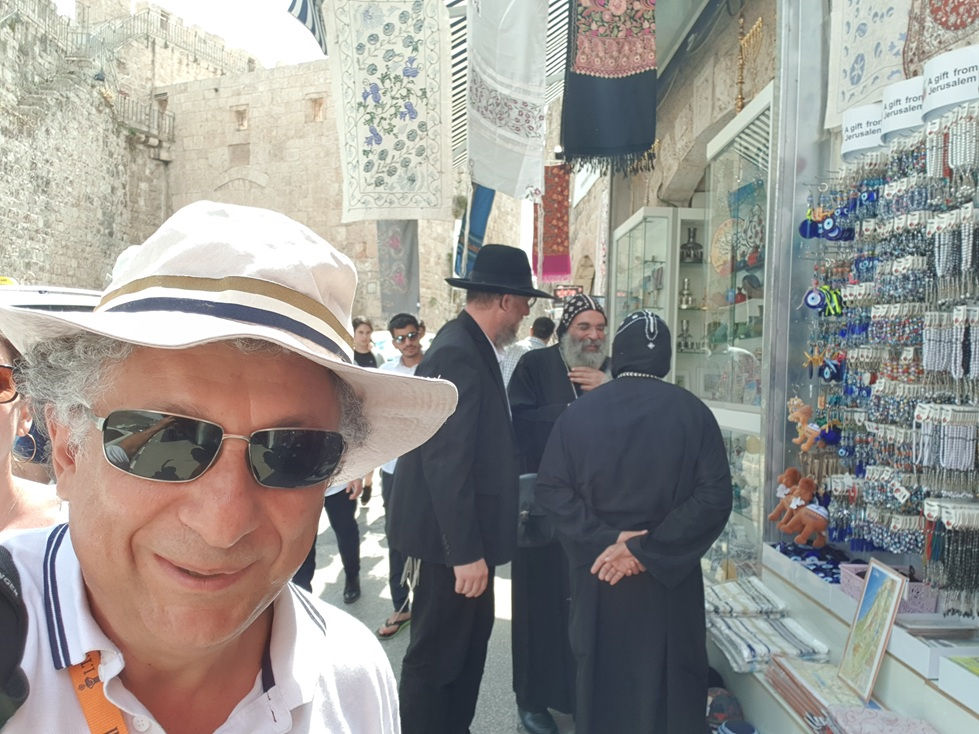
The souks are full of shops selling spices (try the za'atar), ceramics (especially Armenian), souvenirs, religious items (for Christians, buy these and candles before visiting the Holy Sepulchre), and local crafts (beware of imported Chinese items, and there are many). There are also shops selling authentic antiques recognized by the relevant authorities (contact me if interested). Of course, bargaining is common in many shops and is part of the experience. Final tip: everything you buy in the souks should be paid for in cash (Shekel, Euro, Dollar) as there have unfortunately been credit card scams.
Where to eat?
Many small restaurants and street food stalls offer falafel, shawarma, hummus, etc., as well as fresh fruit juices and pastries. You'll find such places in every district of the Old City as you wander around.
How much time should I allow?
Generally, a good half-day (at least for the three iconic sites representing the three religions), or even a full day (which is recommended).
Is it safe?
Generally yes, as it's an extremely popular tourist area and tourism is important for all the city's merchants, but:
Remain vigilant
Follow local and safety guidelines
Check the current security situation before your visit
Should I hire a tour guide?
An official guide from the Ministry of Tourism (displaying a badge) can greatly enhance your visit thanks to the site's rich historical and religious heritage. They will help you better understand the context. Their presence will also help you avoid pitfalls, save you time by eliminating the need to search for locations in a maze of alleyways, and increase your sense of security.
When is the best time to visit?
Avoid the midday rush hour and religious holidays if you prefer to avoid crowds or the disappointment of finding a site closed to visitors (for example, on Saturdays/Shabbats). If possible, try to start early in the morning (quieter and cooler) or aim to end late in the afternoon (beautiful light).
Is it accessible for people with disabilities?
Some areas are more accessible than others, but full accessibility remains limited due to uneven cobblestone streets and numerous stairs and narrow alleyways. It's best to hire a guide in these cases, as they will be better able to reach the desired sites by using the appropriate routes.
Albert Benhamou
Private Tour Guide in Israel
April 2026

Comments