


Seder Olam Revisited: C46b- Hasidism
CHRONOLOGY OF JEWISH HISTORY
Generation 46: Hebrew years 5400-5520 (1640-1760 CE)
Previous page < Navigation > Next page
To return to the list of chronological generations from Seder Olam Revisited, click here.
Introduction
This chronological generation witnesses great turmoil in the European Jewish communities, mainly with two new currents: Sabbateanism, a messianic movement based on the belief that Sabbatai Zevi was the Messiah, and Hasidism, a spiritual movement based on the teachings of the Baal Shem Tov about how to connect with God on every day's actions. Sabbateanism became marginal while Hasidism became popular and widespread in Jewish communities.
Hebrew Year | CE | Event | Source |
5461 | 1700 | Aliyah of Judah ha-Hasid | |
5461 | 1701 | Bevis Marks synagogue in London |
|
5464 | 1704 | Isaac Newton and the end of the world | |
5493 | 1733 | Haim ibm Attar, the Ohr ha-Haim | The Jewish Encyclopedia |
5500 | 1740 | The 110 Jubilees | |
5500 | 1740 | Moshe Chaim Luzzatto, the Ramchal | |
5500 | 1740 | Baal Shem Tov, the Besht | |
5508 | 1748 | The Vilna Gaon | |
5515 | 1755 | Haim Azoulay, the Hida | |
5515 | 1755 | The Marquis of Pombal | Elias-Haim Lindo, The Jews of Spain and Portugal |
5516 | 1756 | Hart Lyon, chief rabbi of England | |
5519 | 1759 | The baptism of Jacob Frank | |
Year 5461 – 1700 CE – The Aliyah of Judah ha- Hasid
Judah Ha-Hasid was a Jewish preacher who gathered some 1500 Jews across Europe over 3 years and convinced them to make Aliyah to Jerusalem, meaning moving to live there. Most of them were Ashkenazi Jews but one third of the group died before they reached destination. They left an Italian port in the year 1700 and contracted debts to pay for their passage, assuming that the Jewish community of Jerusalem (which was about the same size of this group at the time) would back them up financially... When 1000 of them arrived in Jerusalem, Judah died a few days later. The small local community, who themselves had little financial resources (due to the Ottoman laws that prevented them from doing anything except to live in the city) lived on donations from abroad, could not afford to sustain so many immigrants who doubled the Jewish population of Jerusalem.
They newcomers started to build a synagogue with more debts from local Arab suppliers and workmen. By 1729, when the debts were still being unpaid, a mob of angry Arabs attacked the synagogue and destroyed it: its ruins gave it its name as the Hurva (meaning the Ruin). The Sultan also forbid Ashkenazim to enter Jerusalem anymore! Many of them found refuge in the other cities of the Yishuv and others remained in Jerusalem dressed in Sephardi oriental clothes to avoid being attacked. In these Ottoman times, Jews were only allowed to live in four cities, nicknamed the "holy cities", and composed what is called the Yishuv, meaning the settlement. These four cities were: Jerusalem which hosted all three monotheist religions (only the Old City was inhabited in these times, until the end of the 19th century), Hebron (because Jews were worshiping the tombs of the patriarchs, Tiberias (because there was a long history of Jewish presence there, also as a place of burial of great Jewish scholars such as Rabbi Akiva, Maimonides, Rabbi Meir and others), and, lastly, Safed which didn't have a history of Jewish presence but was a city where the Ottoman allowed Jews to inhabit in order to develop a new dyeing business (they had the know-how).
So, the Hurva was destroyed in 1729 and was only rebuilt in 1862 and was named Hurvat Judah HeHasid, which means the "Ruin of Judah the Pious". It was the tallest synagogue in the Jewish Quarter and functioned until 1948 when the Jordan Legion took control over the Old City, during the Independance War of Israel, and destroyed the entire Jewish Quarter, houses and synagogues, and did an ethnic cleansing by expelling the Jews from their historical quarter.

Year 5461 – 1701 CE – The Bevis Marks synagogue in London
The first Jewish community of London, composed of Marranos who returned to their ancestral Jewish faith and of other Jews who came from Holland, became important enough in size to justify the building of a larger synagogue in London, barely 50 years after Cromwell nullified the former decree of expulsion (see document C46a, year 1656).
This synagogue, off Bevis Marks Street near Aldgate in London, was completed in 1701. It is the oldest synagogue of Great Britain which is still in use today and also the one of Europe which has enjoyed the longest continuous worship, without interruption: indeed, some synagogues of Europe are older than Bevis Marks but their service had been interrupted during several periods, including during WW-2, whereas Bevis Marks had been active non-stop for over 300 years.

Year 5464 – 1704 CE – Isaac Newton and the end of the world
Isaac Newton is best remembered as the scientist who gave the first understanding of how the world actually worked, thanks to his laws about movement, forces, and gravity. But it is somehow less known that, towards the end of his life, he was entirely absorbed in religious and Biblical studies.
From 1690, he wrote several studies on the Biblical Scriptures, such as an essay on the Temple of Solomon which he considered to be a reflection of the universe (to see this work, in Latin, click here). Newton was also determined to estimate the date of the end of the world. His calculations in 1704, based on his own interpretations of a known passage of the Book of Daniel, he considered that the world would end no earlier than the year 2060. In fact, his estimation falls indeed in the brackets given by Jewish tradition while he must have been aware of the Ussher chronology (see document C46a, year 1642). But Newton never published his study on the end of the world, maybe by fear of being ridiculed by scientists, or being condemned by the Church of England. So it is only in very recent years that his manuscripts have been brought to the public eye (for more information on Newton's Biblical studies, click here).
Year 5469 – 1709 CE – Aaron Hart, the first Chief Rabbi of England
Very soon after the Spanish and Portuguese Jewish immigrants, an Ashkenazi community also settled in England. They came from all Europe, including Holland and Poland, because England was a rising maritime and commercial power at the time. Other countries with absolute rulers, such as the French "Old Regime", were in decline and losing ground to emerging and liberal nations such as England and Prussia.
The newcomers to England were mostly merchants and financial dealers and, with the trade opportunities that England had to offer at the time, business started to grow very quickly. A first synagogue was erected in 1690 at Duke's Place, near Aldgate. Dukes' Place no longer exists but was probably located where Bury Street is today. Both Bevis Marks and Dukes' Place were located very close to the ancient London Wall.
But it soon became too small for the growing Ashkenazi community, and a new larger synagogue was dearly needed. The Hart family, originating from Breslau in Poland, was an important part of this Ashkenazi community. Moses Hart, who already participated to the project of the first synagogue, financed again the construction of the Great Synagogue of London in 1722. The consecration of the Synagogue was done on Rosh Hashanah, 18 September 1722. The post of Chief Rabbi was naturally given to his scholarly brother, Aaron Hart, from 1709 until his death in 1756.

Year 5493 – 1733 CE – Haim ibn Attar, the Ohr ha-Haim
Haim ibn Attar was born in Meknes, Morocco, in 1696 and became a prominent rabbi of the community there. The ancestor of the family was probably a Jew from Provence who dealt with the trade of spices in Northern Africa before settling there. For the history of the Jews of Northern Africa, and the origin of their names, there is the book in French from Maurice Eisenbeth, Les Juifs de l'Afrique du Nord, published in Algiers in 1936. The author was the Chief Rabbi of Algiers. Concerning the name Attar, he mentions that it means "spices trader" in Arabic and was used in Al-Andalus and Northern Africa for people of such profession. So, the ancestor of Haim ibn Attar may have been a spice trader who must had settled in Morocco, when the persecution in Spain became too harsh.
In 1733, Haim ibn Attar set himself to emigrate to the Land of Israel. On the way, he stopped at the Italian harbor of Livorno (Leghorn in English) and was kept there by the Jewish community who was in dire need for a leader and rabbi. To convince him to stay, they opened a yeshiva to enable him to educate the youth. He remained there about 10 years then finally completed his intended journey and reached Jerusalem in about 1742, where he died a year later. One of his disciples, Haim Azoulay, wrote about him:
Attar's heart pulsated with Talmud; he uprooted mountains like a resistless torrent; his holiness was that of an angel of the Lord, ... having severed all connection with the affairs of this world. (source: The Jewish Encyclopedia)
Haim ibn Attar is known as the Ohr ha-Haim (meaning "the Light of Life") after the title of the work that made him famous. The book is a commentary of four important tractates of the Talmud. It was first published in Amsterdam in 1732.
Haim ibn Attar is buried at the Mount of Olives in Jerusalem, and his tomb is a place of pilgrimage until today.

Year 5500 – 1740 CE – The 110 Jubilees
The Hebrew year 5500 marks the cycle of 110 Jubilees from the Creation (110 x 50 years = 5500). Exactly half the period (55 Jubilees) ago, was the time of the erection of the (First) Temple of Jerusalem by Solomon (see document C23b, years 1015-1008 BCE), thus marking the beginning of the divine service for the Jewish people and the divine presence on earth in the Temple. This current period also proved to be worthy to the Jews with the emergence of leading Rabbinical authorities who influenced the Jewish life as importantly as pillars of the Temple and prepared for the return of the Jews to their ancestral homeland. The three main scholars of this period were: Luzzatto the Ramchal, the Baal Shem Tov, and the Vilna Gaon. Through their teaching or doctrine, they have brought a turning point in Jewish faith.
Year 5500 – 1740 CE – Moshe Chaim Luzzatto, the Ramchal
Luzzatto was born in Padua, Italy, in 1707. At the age of 20, he had a mystical encounter that changed his life and started to influence students around him about mystics and alchemy. This drew the attention of the Italian rabbis who threatened him of excommunication. He fled to Amsterdam in 1735, eager to find a more open-minded environment.
There he published in 1740 his masterpiece, Messilat Yesharim (meaning "the Path of the Justs"), as a method for everyone to overcome sin and be inspired by prophecy. The great Vilna Gaon (see below), when he read the book in later years after Luzzatto's death, said that, were the author still alive, he would have walked from Vilna to him and learn at his feet (although this quote may not be true). But it is known that the Vilna Gaon stated about the book Messilat Yesharim that there’s not one extra word in all the first eleven chapters (source: TorahThinking.org)
Luzzatto set for the Holy Land in 1743 and settled in Akko (St John of Acre), but he and his family died there from a plague of cholera in 1746. He is buried in Tiberias next to another great Jewish scholar: Rabbi Akiva. Luzzato died at the age of 40 while Akiva started to learn the scriptures at the age of 40. Some say that the lives of Luzzato and Akiva complemented one another to fulfill a scholarly human life of 120 years.
Luzzato's skills were to be able to compose books with deep Jewish meanings but in a secular way, thus making them accessible to scores of readers. He is known as the Ramchal, from the acronym of his name Rabbi Moshe Chaim Luzzatto.
There is an old synagogue in Akko that is said to be the one where Luzzato used to attend.
Year 5500 – 1740 CE – Baal Shem Tov
Rabbi Israel ben Eliezer, who became known as the Baal Shem Tov, or Besht, was born in Ukraine in 1698. He lost his father at the age of 5 and was taken care of by his local community where he started to study. Later he held various jobs in the community and, from 1740, started to teach his own doctrine in the small town of Medzhybizh in Ukraine. The town already had a Jewish centre, and a fortified synagogue (see document C45, year 1570), and hosted a previous famous commentator and Kabbalist called Joel ben Samuel Sirkis, who died in 1640. Sirkis was nicknamed the Bach after his main published work Bayit Chadash (meaning the New House).
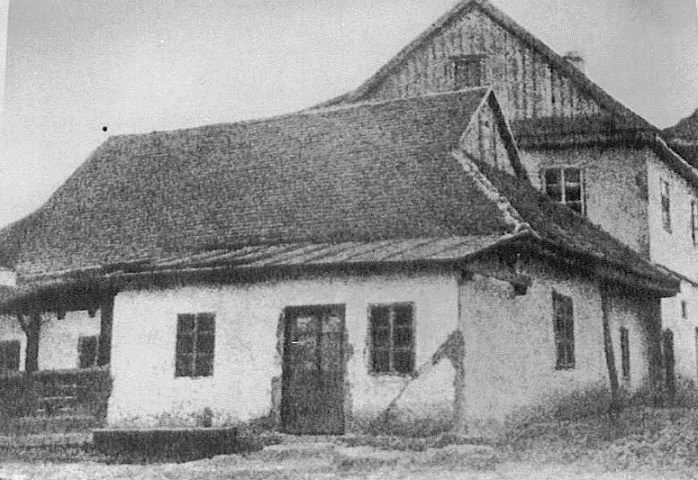
The reputation of the Baal Shem Tov grew rapidly and he obtained recognition for his scholarship, and even saintliness, from many rabbis of his time, including the Sephardi scholar Rabbi Haim Azoulay (see below). His surname Baal Shem Tov (meaning "the master of the good/divine name") was given to him because he was able to accomplish miracles.
The number of his disciples grew considerably, and they formed what was called the Hasidic movement. Writings about his teaching only appeared from his students some 30 years after his death.
Year 5508 – 1748 CE – The Vilna Gaon
In parallel to the Baal Shem Tov in Ukraine, another great Jewish scholar grew in importance in the world of Orthodox Judaism in Vilnius, Lithuania: Elijah ben Shlomo Zalman Kremer, otherwise known as the Vilna Gaon. Born in 1720, he rapidly acquired scholar recognition even from a youthful age, knowing the entire Talmud by heart by the age of 11, thanks to a prodigious memory. At the age of 10, he also taught himself astronomy. By 1748, a trip across the communities in Europe helped him acquired a tremendous reputation by the time he returned to Vilnius.

The Vilna Gaon was involved in the critics against Hasidism by Rabbinical authorities, and, in 1777 in Vilnius, they even issued the first excommunication against the Hasidic movement. The reason for this was mostly due to fears that, similarly to other heretic trends such as Sabbateanism, Hasidism was another movement to direct Jews away from the traditions. It took time for Rabbinical authorities to accept that Hasidism was not a heresy.
Year 5515 – 1755 CE – Rabbi Haim Azoulay, the Hida
Haim Yoseph David Azulay, nicknamed the Hida, was born in Jerusalem in 1724 from a family of Sephardi Jews. The ancestor of the Azoulay came from Spain to Algeria after 1492 and adopted the name Bou Zoulay from a Berber place where he settled which is in the mountains south of the city of Oran. The Atlas Mountains spread from Western Algeria to the south of Morocco and have always offered a natural shelter for Jews and Berbers who fled the persecutions and invasions for hundreds of years, and who sometimes fought together the invaders (Romans, Vandals, Byzantines, and finally Muslims). The name Bou Zoulay then became A-zoulay with some Arabization. Another theory, from Eisenbeth (see above, year 1733), is that the name Azoulay has its origin from Spain. So, the ancestor would have been a Jew who fled from Spain in 1492 at the latest into North Africa.
The Azoulay family prospered in the whole Berber region. One of the early members, Abraham Azoulay, born in 1570 in Fes, Morocco, a city that was home to a large Jewish community, emigrated to Palestine in 1599 and died in Hebron in 1643. Abraham Azoulay authored a commentary of the Zohar and a Kabbalistic work, Chesed le-Abraham (Mercy to Abraham). Haim Azoulay was one of his grandchildren. The rest of the Azoulay family also prospered in Northern Africa until their emigration to the State of Israel in the 20th century.
Haim Azoulay received religious education from prominent scholars of Israel, such as Haim ibn Attar (see above), the famous Ohr ha-Haim, before his death in 1743, and wrote many anecdotes about him.

Haim was sent three times as an emissary to the Jewish communities. His first travel took him to France and Germany in 1755. The second one to Egypt in 1764. The third and last one was in 1773 to Tunis, Morocco and Italy. In Italy, he remained for some time to supervise the publishing of the works he took from Israel. He then proceeded to France in 1777 and Holland in 1778. But it is finally in Livorno (Leghorn) that he returned and settled, marrying there, and occupied himself with the publishing of many works. One of his numerous works is Shem ha-Gedolim (meaning "the Names of the Great Ones") which gives a biography of several rabbis especially from Israel.
He died in Livorno at the age of 82 in 1806 (Hebrew year 5566) and was buried there. But his remains were transferred to the Har HaMenuchot cemetery, west of Jerusalem, in 1960 to fulfil his final wish. His grave is housed in a special memorial structure called an "Ohel" (meaning a tent) as it is done for important scholars.
Year 5515 – 1755 CE – The Marquis of Pombal
Many Jews who remained in Portugal and converted to avoid being expulsed without their children (see document C44, year 1497) ended up, after three centuries, among the aristocracy of the country, or in high public positions. The 1st Marquis of Pombal, who became in 1755 the Prime Minister of King Jose I, after the earthquake that destroyed Lisbon in that year, was the one who ended the Inquisition practice of auto-da-fe in Portugal. He may also be remembered for his liberal policy, especially concerning the Jews and "New Christians" (converts), by the following anecdote:
Joseph I [The King of Portugal], ordered that all [New Christian] Portuguese who were in any way allied or descended from the Hebrew race, should wear a yellow hat. The old Marquis [of Pombal] shortly after appeared at court with three of them under his arm. The King, smiling, asked him: "What do you have them?" He replied, "That he had them in obedience to His Majesty's command, for he did not know a single Portuguese of note who had not Jewish blood in the veins." "But," said the King, "why have you three?" He answered, "One for myself, one for the Inquisitor-general, and one in case Your Majesty should wish to be covered." (Elias-Haim Lindo, "The Jews of Spain and Portugal", London, 1848 p.375)
Year 5516 – 1756 CE – Hart Lyon, Chief Rabbi of England
Hirschel Levin, born in Lithuania, succeeded Aaron Hart as Chief Rabbi. Levin was known in England as Hart Lyon. But he was more interested in his Talmudic studies than in the politics that a post of Chief Rabbi must have necessarily involved. So, he resigned from his post in 1763 and moved to Mannheim, Germany, where he took the post of rabbi before moving to Berlin in 1772 for the same post.

After the resigning of Hart Lyon, a dispute lasted for the next 24 years for the post of Chief Rabbi, with two claimants: Meshullam Solomon and Tevele Schiff.
Year 5519 – 1759 CE – The baptism of Jacob Frank
Jacob Frank, born in 1726 in Ukraine (the region belonged to Poland at the time) from a father who followed the Sabbatian movement (disciples of the false messiah Sabbatai Zevi, see document C46a, years 1648 and 1666), announced in 1756 that he was the reincarnation of Sabbatai Zevi, after returning from a trip in the Ottoman empire. He was quickly denounced by the local Rabbinical authorities and obliged to flee his village.
He, however, gathered several followers, from the ranks of the Sabbatians. He was engaged in a disputation against Talmudists under the watch of the authorities. But the Church also followed this dispute with interest and declared the "Frankist" doctrine as the winner. These followers were requested to apply the natural conclusion which was baptism to Christianity.
This is what Jacob Frank did on 17 September 1759. However, they were followed with suspicion by the Church and Frank was later put in jail where he remained for the next 13 years.
In 1772, Poland was partitioned between Russia, Prussia and Austria, so Frank was released by the Russian authorities. But he was seen as a tool to help convert Jews to Christianity, especially by the Austrian ruler. Frank finally settled in Offenbach, Germany, with his daughter Eva. He died there in 1791, and his daughter became the next leader of the Frankist movement until her death in Offenbach in 1816.

Previous page < Navigation > Next page
To return to the list of chronological generations from Seder Olam Revisited, click here.
Albert Benhamou
Private Tour Guide in Israel
Tishri 5786 - October 2025


Comments