


Auschwitz timeline: 1942
Updated: Jul 19
Before continuing with this timeline of the history of Auschwitz, please ensure you have first read the previous timeline for the period 1940-1941. To read it, click here. Here we continue reading the Auschwitz timeline for the year 1942.
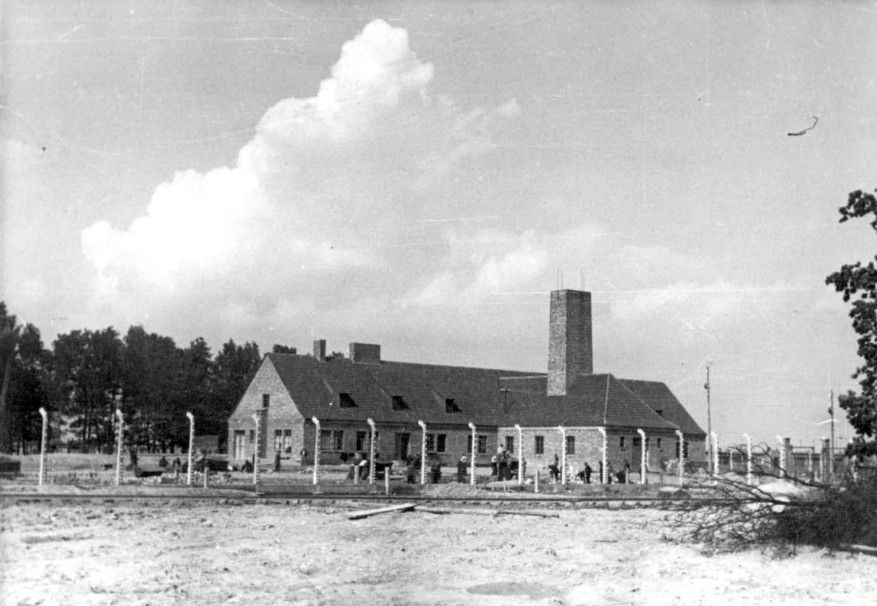
January 1942: The new building, including a gas chamber adjacent to the crematorium, is operational at Auschwitz. The remaining problem is the noise level caused by the screams of the victims, which is difficult to conceal from the prisoners in the nearest buildings. So, during the gassing, the SS decide to activate engines from two motorcycles in an attempt to drown out the screams.
January 15, 1942: Karl Fritzsch, Rudolf Höss' deputy at Auschwitz, and the one who conceived the idea of using Zyklon B to gas the prisoners, is transferred to the Flossenbürg camp in Germany.

January 19, 1942: In preparation for the Wannsee Conference the following day, Himmler created the SS Main Economic and Administrative Office (WVHA) under the direction of General Oswald Pohl. After Himmler and Heydrich, Pohl became the third most powerful figure in the SS. He was in charge of the 20 concentration camps (including Auschwitz) and the 165 labor camps. Furthermore, he directed all construction projects and managed all SS economic enterprises (including contracts with IG Farben).
January 20, 1942: The Wannsee Conference takes place. It is a meeting convened by Heydrich to implement the order received from Göring, dated July 31, 1941, concerning the Jews. The meeting consists of 15 participants, 8 of whom hold doctorates! It was initially scheduled for December 9, 1941, but the attack on Pearl Harbor and the US entry into the war caused a change in Hitler's mind. Indeed, in July 1941, the term "Final Solution" meant the deportation of Jews from the Reich to the east. But now, Hitler wants the "Final Solution" to aim at the destruction of the Jews of Europe (that is, nearly 10 million people of all ages). To this end, a detailed plan is drafted by Adolf Eichmann for presentation at the meeting. Part of the discussion doesn't even concern the mass murder of Jewish civilians, but rather the legal definition of who was Jewish. This is because some Germans are "mixed-race," born to one Jewish parent and one non-Jewish parent. In these cases, it is decided to offer them the choice between sterilization and deportation. The urgent problem of the Jews in occupied USSR is also addressed. The report of the decisions of this meeting is then circulated within the Nazi administration, but the language is veiled: only those who need to understand would understand.
January 25, 1942: A few days after the Wannsee Conference, Himmler orders Richard Glücks to prepare the camps for the immediate arrival of 100,000 Jewish men and 50,000 Jewish women evacuated from the Reich. They are to be used as forced labor to replace the increasingly scarce Russian prisoners of war, almost all of whom already died from torture or starvation. Glücks, under the orders of Oswald Pohl, is in charge of using concentration camp prisoners for forced labor. It was he who, on February 21, 1940, had recommended the site of Auschwitz, a former Polish barracks, to Himmler and Heydrich as a concentration camp.
February 1942: A meeting takes place in Bratislava between Dieter Wisliceny (Eichmann's envoy) and Vojtech Tuka, Prime Minister of Slovakia (an Axis ally), to decide the fate of Slovak Jews. Tuka wants Germany to deport entire families, deeming it "unchristian" to separate parents and children. But the Reich does not want unproductive labor (including children). Slovakia offers to pay 500 Reichsmarks per deported Jew, of any age, in exchange for which the Germans would deport entire families with the promise that the Jews would never return. This measure is presented as humanitarian, to preserve the unity of Jewish families! Thus, Slovakia sells its Jews to the Nazis. Of course, the Nazis have another plan besides providing unproductive labor: their extermination.
February 15, 1942: The first transport of Jews arrives to Auschwitz. They come from neighboring regions of Silesia, including those from the town of Bytom near Katowice. The Jewish community of this town had been established there since the 13th century. They are gassed and cremated upon arrival in the camp's new crematorium building.
February 23, 1942: Theodor Dannecker, of Section IVb (headed by Eichmann), travels to Sofia and signs an agreement with the Bulgarian government for the deportation of 20,000 Jews, with the promise that Bulgaria would not claim them. However, their deportation will not take place until the end of March 1943, at the same time as that of the Greek Jews.
February 27, 1942: Rudolf Höss makes the decision to establish a gas chamber in the woods of Birkenau, outside Auschwitz, to avoid the sound of the victims' screams. A small house has to be converted as quickly as possible: the windows have to be bricked up, and two enclosed spaces have to be created to serve as gas chambers. This house is nicknamed "The Little Red House" or Bunker 1. Höss could now kill in secret in Auschwitz itself, without disturbing either the prisoners or his family who were housed in a house near the camp. This bunker, however, does not have a crematorium: the bodies have to be buried in mass graves in the adjacent meadow. After the war, Höss will estimate that approximately 70,000 Russian prisoners of war were eliminated in this bunker.
For the same reason—the noise of the gassed victims—the initial idea of building a second gas chamber at Auschwitz is rejected. The site chosen for new constructions of this type is Birkenau, which will become also known as Auschwitz II.
Another new development, so to speak, is the formation of Sonderkommando (SK, or special commando). These are prisoners selected from each transport for the task of disposing of the gassed bodies. Initially, after this gruesome work, these SK members are themselves killed by phenol injection at the Auschwitz camp before being cremated in the on-site crematorium. Thus, the SK commandos are initially replenished with each transport.
And so, the Auschwitz labor camp is augmented by the Birkenau extermination camp.

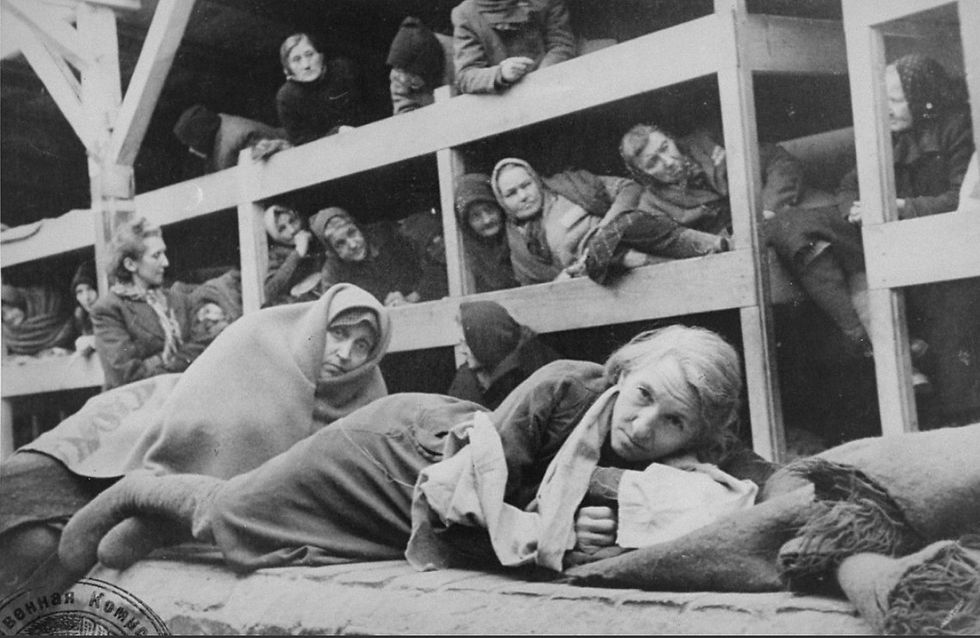
March 20, 1942: The last Russian prisoners of war who had worked on the construction of the Birkenau camp are gassed in the newly operational Bunker 1. They are the first to be gassed there. At the same time, the first prisoners are moved into the new Birkenau camp. Conditions are harsh, as not everything is yet functional, including water, medical care, supplies, etc. Many prisoners are sent back to Auschwitz as corpses to be cremated.
March 21, 1942: In the Auschwitz camp, the fence separating the camp for Polish prisoners from that for Russian prisoners (those sent to Birkenau or already deceased) is torn down and replaced with a concrete wall. Rumors circulate that the Russian camp would be used as a camp for female prisoners. Until then, Auschwitz has been a camp for men only.
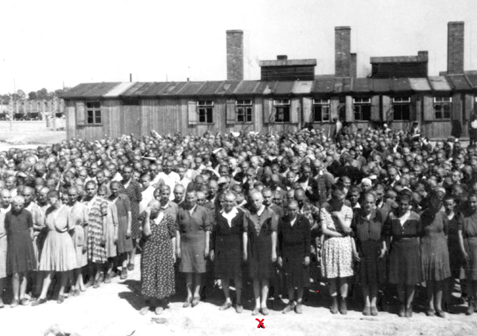
March 26, 1942: The rumor proved true: the first convoy of women arrives in March 1942. It consists of some 1,000 Jewish teenage girls from Slovakia. Several are deemed too young, and therefore unfit for forced labor, and are sent directly to Block 11, the block of sure death in front of the black wall. As usual, the torturer Palitzsch is in charge of these executions by point-blank shooting. Kielar, a Polish prisoner, recounted: Gienek (the stretcher-bearer) wept uncontrollably and pounded his fist against the damp morgue wall like a child who had suffered an injustice. "They were ordered to undress; it was the first time in my life I'd ever seen a naked woman, and it had to be in those circumstances that I saw her; the others (the SS) were shaming her; they kept her until the end; he pushed back her hair, her long hair, with the barrel of the rifle. (Gienek) Obojski was no longer in control, digging his nails into the wall and convulsing so violently that he nearly suffocated. "If she ever saw me," he continued. "She made the sign of the cross before they fired; she fell forward onto her face… The (SS) guy turned her over with the tip of his boot… And I wanted to… but Theo… they'll pay for this… (…) From that moment on, Gienek was never the same." His gaze had lost its naiveté, and the childlike smile had vanished from his face, which now expressed only bitterness. He hardened and began to resemble Theo, becoming indifferent to everything.
March 27, 1942: Almost simultaneously, a contingent of SS women arrives at Auschwitz to serve as guards for the women's camp. They had been trained for this task at the Ravensbrück concentration camp. The pace of women's transports quickly increases: Polish prisoners and even German women (common criminals and political prisoners, including Eleanor Hodys, an Austrian). Within a week, all the buildings designated for the women are full. The SS officers at the camp organizes a welcome party for their female colleagues, as the prisoner Tadeusz Rybacki recounted: It was a gangster's party. They sang, drank, slapped each other on the back, and the alcohol flowed freely. […] A large, drunken woman was staggering along, probably going to the restroom, and she saw us [the Polish waiters] standing there and started making suggestive gestures. Our faces froze, and we whispered to each other, "What does that bitch want?"

March 30, 1942: The first convoy of French Jews arrives at Auschwitz. It had left France on March 27 and carries 1,112 men from the transit camps of Drancy and Compiègne. Those deemed unfit for forced labor are gassed in the bunker, then SK commandos remove their gold teeth and cut their hair. The bodies are then buried in mass graves.
April 1942: Wisliceny's testimony at the Nuremberg Trials on January 3, 1946: Himmler gave the order in April 1942 not to immediately kill Jews who could be used as forced labor, hence the principle of "selection."
April 1942: With the arrival of several transports of Slovak Jews, a new Sonderkommando (SK) team is formed for the bunker. The SK has now 200 members. The deportation of Slovak Jews takes place in two phases: the first in March-April 1942 and the second in May-June 1942, with a total of 52,000 deportees.
April 2, 1942: A 19-year-old Slovak Jew, Otto Pressburger, testified: From the train station, we had to run in groups of five. The SS shouted "Schnell Laufen!" "Run, run, run!" and we ran. They killed on the spot those who couldn't run. We felt less than dogs. We had been told we were going to work, not that we were going to a concentration camp.
Then he recounted his first day of forced labor the next day at Birkenau: There was a Jew from our town, a tall, strong man from a wealthy family. The kapo noticed his gold teeth and demanded he hand them over. [...] The kapo became angry and declared that we all had to obey his orders. He took the shovel and struck him repeatedly on the head until he fell. The kapo turned him over, placed the shovel against his throat, and crushed his neck. He used it to pull out his teeth. [...] That evening, we had to bring twelve corpses back to the barracks. He had killed them for pure pleasure. All of this happened on the first day of work.
May 4, 1942: A second house in the woods of Birkenau is converted into a gas chamber. It is nicknamed "the little white house" or Bunker 2. It can gas 1,200 people at once thanks to its four gas chambers, compared to the two in Bunker 1.
May 6, 1942: While visiting Paris, Reinhard Heydrich declares to the SS there: Just as with the Russian Jews of Kyiv, the death penalty has been pronounced against all the Jews of Europe. Even against the Jews of France, whose deportation will begin in the coming weeks. Heydrich is assassinated by a Czech commando a little later in Prague, on May 18, 1942. He dies of his wounds on June 4. The plan for the mass murder of Polish Jews in three extermination camps (Belzec, Sobibor, Treblinka) would bear his name as the architect of this plan: Aktion Reinhard.
May 17, 1942: Several prisoners at Birkenau begin digging a site where Crematorium II would be built (the one at Auschwitz is then designated Crematorium I).
June 20, 1942: According to historians, the mass murder of Jews at Birkenau begins on this date. At that time, the Auschwitz complex holds 150,000 prisoners and 3,000 SS guards, and is divided into three camps: Auschwitz I (the first camp), Auschwitz II (Birkenau), and Auschwitz III (Monowitz with its Buna rubber factory), as well as dozens of smaller subcamps. Prisoners used for forced labor are tattooed with a number on their arm and counted (even their deaths are recorded but under false pretenses such as heart attack or pneumonia).
June 20, 1942: Daring escape from Auschwitz of 4 Polish prisoners: Kazimierz Piechowski and Eugeniusz Bendera stole an SS officer's car from the mechanics workshop where they worked, and passed the main gate along with Józef Lempart, a priest, and Stanisław Gustaw Jaster, a first lieutenant and veteran in the Polish army. Piechowski had the best knowledge of the German language and fooled the SS guards. The SS were unsuccessful to recapture the four escapees despite an intense manhunt. In reprisal, Piechowski's parents were arrested by the Germans and murdered in Auschwitz. The policy of tattooing prisoners (raher than attaching a sign or number on prisoners' clothes) was also allegedly introduced in response to this escape. Jaster, a member of ZOW (the resistance organisation set by Pilecki in Auschwitz), carried with him a detailed report about conditions in the camp, written by Pilecki himself. This report was passed to Polish resistance and from them to London and the Allies.
June 22, 1942: Eichmann informs the Foreign Ministry that the deportation of Jews from Western countries will begin, notably from the Netherlands, Belgium, and France, for a total of nearly 100,000 people.
June 30, 1942: While awaiting the construction of Crematorium II at Birkenau, Bunker 2 (the small white house) becomes operational. To give a semblance of normalcy to the victims destined for immediate gassing, canisters of Zyklon B are brought to the gas chambers by an ambulance bearing the Red Cross emblem. Later, wooden huts are also built near the gas chambers so that victims can undress before being gassed. Until then, victims were undressed by members of the SK after gassing, which slow down the entire industrial extermination process. Tactics also change: SK members are sent to mingle with newly arrived victims to calm them before they enter the bunker for gassing. They are sternly warned that if they tell the victims the truth, they will be shot immediately. If one of the condemned men begins to panic, the SK members must take him aside, restrain him, and the SS officer, ready to intervene, shoots him with a small-caliber weapon. Sometimes, an SK member discovers a loved one among the corpses. He either manages to overcome this emotional ordeal or breaks down, in which case he is immediately shot. This is the case for Otto Pressburger, who is a SK member in July 1942. He sees his older brother, Aladar, arrive from Czechoslovakia with his wife and daughter, but they don't recognize him because Otto is shaved, emaciated, and skeletal. It is only when Otto sings a song from his childhood that Aladar thinks o recognizing him. Moments later, Aladar and his family are gassed.
July 4, 1942: The first Sonderkommando (SK) is established to be permanent (and not disbanded after each transport). This is done for efficiency, ensuring that the selected SK members knows their assigned tasks and can operate promptly. This also marks the beginning of the selection method implemented upon the arrival of a transport. This selection takes place at the "ramp," a railway branch line between Auschwitz and Birkenau, approximately 3 km apart. This ramp, called the "Judenrampe," will be used until the spring of 1944, when a new railway line will allow the transports to enter the Birkenau camp directly.
July 16-17, 1942: The Vel' d'Hiv Roundup in Paris. Approximately 28,000 Jews are arrested for deportation. Around 9,000 French police officers are employed in the roundup, without SS involvement. Only 400 of these Jews survived the war.
July 17-18, 1942: Himmler's second visit to Auschwitz, primarily to decide on the construction of additional factories in the area. During his visit to Birkenau, he is shown how the gassing of a transport (of some 2,000 Dutch Jews) is carried out in Bunker 2. However, he does not approve of the use of mass graves for burying the bodies and orders that they are exhumed and burned. The main reason is to avoid leaving any trace, in the form of mass graves, of the extermination. The other reason is the risk of contaminating the soil and water in the area.

July 19, 1942: Following his visit to Auschwitz, Himmler orders the "relocation" of the entire Jewish population of the General Government to be completed by December 31, 1942. The Nazi leaders understand the double standard: relocation means deportation followed by extermination. Consequently, Rudolf Höss continues building crematoria at Birkenau in order to "process" a larger number of deportees and also to dispose of their remains in ovens.
July 29, 1942: German industrialist and Nazi opponent Eduard Schulte travels to Zurich, where he informs Jewish organizations of Himmler's presence during the gassing of 449 Jews at Birkenau. This information, along with other evidence, convinces the British and American governments to condemn these practices in December 1942 and to warn the Nazis responsible of the consequences of their crimes. However, the Allies take no further concrete action to save the Jews of Europe. Nevertheless, these prior warnings will help remove a legal obstacle at the future Nuremberg trials as it will allow for the retroactive application of the new law on crimes against humanity against Nazi leaders, as they had been warned of consequences.
August 4, 1942: The first convoy of Belgian Jews arrives at Birkenau. The procedure, now routine, is the same: selection followed by gassing or forced labor.
August 9, 1942: Edith Stein and her sister arrive at Birkenau and are gassed immediately after selection. She is 51 years old. She had taught in Germany before the war. In 1933, she was expelled from university because she was Jewish. She then converted to Catholicism and entered the Carmelite order. To avoid persecution, she was sent to a convent in the Netherlands where she was arrested in August 1942, along with other Catholics of Jewish origin, and sent to Birkenau. She was canonized by Pope John Paul II in 1998.
August 6–15, 1942: The women held at Auschwitz I are transferred to Camp B-Ia at Birkenau (formerly a camp for Russian prisoners of war). The separation wall between men and women at Auschwitz I is destroyed, and the entire camp is now reserved for male prisoners only.
August 17, 1942: From the Drancy transit camp, seven convoys of Jewish children are sent to Birkenau to be gassed. These children, of all ages, had been separated from their parents at the Nazis' request after the Vel' d'Hiv roundup and held in appalling conditions at Drancy by the French police while awaiting deportation.
August 19, 1942: The plan to build not one but four crematoria at Birkenau, in anticipation of the influx of Jews to be exterminated, is under consideration. Architects, industrialists, and many others work on this vast new project to murder civilians for their religion.
August 21, 1942: The deportation of Slovak Jews is suspended when their government learns of the extermination of the Jews through testimonies from refugees who had escaped from Birkenau. The Church and the Vatican voiced their opposition so the Slovak authorities asked Wisliceny to organize a visit to these camps where Jewish Slovak citizens are believed to have been deported to labor camps. Rather than arrange such a visit, the Nazis react by suspending the deportations. The Jews still remaining in Slovakia are then able to live in relative peace for the next two years, until the deportations resumed on September 30, 1944, after the occupation of Slovak territory by German troops.
August 29, 1942: To combat the typhus epidemic in the Auschwitz I camp, a radical decision is made: all prisoners are ordered to leave their buildings for a "selection." The prisoners have to stand in front of their buildings, undress, and run in front of a Nazi doctor. Those he deems weak or ill are sent to the execution group. Several thousand prisoners are thus selected and taken to special blocks where they await death. Knowing they have been "selected," they are aware of their fate and suffer extreme mental anguish. They are gradually transferred to the gas chambers of Birkenau. Sometimes, a simple pustule, a flabby bottom, or even a simple appendectomy scar was enough to be condemned to death. The Nazi doctor Entress also sends almost all the prisoners hospitalized in Medical Block 10 of Auschwitz I to the gas chambers. The remaining prisoners fit to work are thoroughly washed and kept naked in the disinfected blocks where the women had been held, until their own blocks are also disinfected.
September 1942: Oskar Groening, 21, arrives at Auschwitz as an accountant and witnesses selections and atrocities against Jews. He would later declare after the war: Nazi propaganda had such an impact on us that you considered the extermination of the Jews an inherent part of the war. As a result, no feelings of sympathy or empathy arose. [...] Children are not the enemy at that time. The enemy is their blood. The enemy is growing up and becoming Jewish, potentially dangerous. And that is why the children were also affected. Between these two battles, the one waged openly at the front and the one fought behind the lines, there is absolutely no difference: we have only exterminated enemies.
September 2, 1942: Dr. Johann Kremer, 59, a doctor who arrived at Birkenau on August 30, wrote in his diary: I witnessed a special operation (selection followed by extermination) for the first time at 3:00 a.m. In comparison, Dante's Inferno seems almost comical. Auschwitz is rightly called an extermination camp!
During his trial in Krakow after the war in 1947, he described in detail these "special operations" carried out in the bunkers in the Birkenau woods.
September 5, 1942: Dr. Johann Kremer witnesses another "special operation," this time against female prisoners who are no longer fit to work. In such a physical and mental state, a prisoner is then nicknamed a "Muslim," and he has little time left to live before the selection that sends him to the gas chamber. He writes: The most horrible of horrors. Hauptsturmführer (Heinz) Thilo was right when he told me today that we were in the anus mundi (the anus of the world). I used that expression because I could not imagine anything more repugnant and more horrible.
Kremer further explains: Because of the special rations they receive—a fifth of a liter of schnapps, 5 cigarettes, 100 grams of salami, and bread—all the men (SS guards) insist on participating in these actions.
September 6, 1942: Dr. Johann Kremer records the arrival of another transport: On that day, 981 Jews were transferred from the Drancy internment camp to the Auschwitz concentration camp. Among them, 16 men and 38 women were accepted as prisoners (for forced labor). The others were killed in the gas chambers.
Kremer continues to record the transports and how many people passed the selection process, with a ratio of at least 90% being sent directly to the gas chambers.
September 16, 1942: Rudolf Höss travels to Chelmno, near Lodz, with Franz Hössler and Walter Dejaco to learn about their method of disposing of corpses. They observe a system of alternating piles of bodies and wood, combined with what they call a "grill" made of railway tracks. Back at Birkenau, Hössler is given the orders to exhume the bodies from the mass graves and cremate them according to Himmler's directive. This practice of burning bodies on pyres continues until the Birkenau crematoria were operational.
September 17, 1942: Mala Zimetbaum arrives at Birkenau from Belgium in a convoy of 1,048 Jews. She is spared thanks to her fluency in several languages (Dutch, French, German, Polish, Italian, and English). She becomes the protégée of Maria Mandl, head of the female SS guards. Primo Levi said of her: At Birkenau, Mala served as an interpreter and messenger and, as such, enjoyed a certain freedom of movement. [...] She was generous and courageous. She helps many of her fellow prisoners and was loved by all. Later on, she has a love affair with Edek Galinski, a young Polish prisoner, and they will succesfully escape from the camp in 1944. But they will be caught and brought back to be executed as an example.
September 21, 1942: Approximately 300 members of the Sonderkommando (SK) are used to set up large pyres at Birkenau, exhuming the bodies of those gassed in the past and burning them in the open air, day and night (the burning of bodies took 7 to 8 hours). The remaining bones are then ground up by SK members, and all the ashes are thrown into the Vistula River (which flows to Warsaw and beyond) or into basins built nearby. The SS officer who directs this macabre operation is Otto Moll. He is a particularly sadistic and bloodthirsty man, one of the worst SS officers.
Höss estimates that 107,000 bodies are exhumed and cremated over several weeks.
Filip Muller writes: This group (the SKs) was mainly composed of Czechoslovakian Jews and a few deportees from France.

September 26, 1942: During a visit to Auschwitz, General Oswald Pohl (who oversees all Nazi camps) authorizes the construction of new, large crematoria at Birkenau, which is intended to become the main extermination camp for Jews in Western Europe. The architects of these crematoria estimate that it would be possible to cremate nearly 1,000 bodies per day in each of the four crematoria.
September 28, 1942: During a phenol injection session on some prisoners in Block 20 of Auschwitz I, a prisoner, Jean Weiss, assists Dr. Josef Klehr by holding the victim during the injection. That day, however, it is his own father whom he is helping to kill. The next day, Weiss is devastated, and Klehr asks him what happens. When he tells him about his father's execution, the doctor replies that if he had spoken, he would have spared him. When questioned after the war about why he hadn't told Klehr, Weiss replied that he was afraid Klehr would make him sit next to his father.
October 6, 1942: Seweryna Szmaglewska arrives at Auschwitz with 47 other women from the town of Radom in Poland. After the war, she writes her memoirs in "Smoke over Birkenau," which becomes a bestseller and serves as testimony at the Nuremberg Trials.
October 26, 1942: Approximately 500 prisoners from Auschwitz I are sent to Monowitz, a few kilometers away, to build the synthetic rubber factory (called Buna) for the IG Farben company.
October 30, 1942: Kielar, a Polish prisoner, recounts: Autumn was already well advanced: gray and cold weather; in the mornings there was frost; (…) one morning (in Monowitz), I saw an endless column of women arriving from Birkenau. Each carried two or three bricks, which they would throw with a sigh of relief in the designated spot. They would then retrace their steps and return a few hours later with a new load. They were barefoot and wore threadbare summer dresses that revealed their bodies. They were young and tanned, with remnants of a beauty that time had not yet erased. They were Jewish women from Holland. The SS women stirred up the dogs against them, and the kapos mistreated these terrified young women, half-dead with fear, with particular zeal. This sad procession came two or three times a day, and each day their numbers dwindled. It took no more than a week for the survivors to resemble worn-out old women, in whom it was difficult to recognize the young girls of the beginning. A few more days, and they never returned: no longer fit for work, they had certainly been liquidated. (…) I thought with dread of the approaching winter.
November 1942: In his unreliable memoirs, Felix Kersten, Himmler's personal physician, recounts these words from his boss: I didn't want to exterminate the Jews, Kersten, I had other plans for them; but it was that wretched Goebbels who did everything he could to influence [Hitler] and obtain such a decision. [...] No one will believe it, but shortly after 1933, the Führer ordered me to organize the emigration of the Jews. We created an organization to facilitate this emigration. Hundreds of thousands of Jews were thus able to leave and rebuild their lives abroad. However, a vile campaign was waged against us, which led to the war. Until 1940, Jews could still leave Germany, and Goebbels got his way then. Why Goebbels? Goebbels believed that the Jewish problem could only be solved by their total annihilation." […] In the summer of 1940, the Führer ordered the gradual extermination of the Jews. He entrusted this task to the SS and myself.
November 2, 1942: The Nazi doctor Horst Schumann, approximately 35 years old, begins working in Block 30 of the Birkenau women's camp. There, he set up a workspace where he could conduct his sterilization experiments by irradiating the genitals of young boys and girls with X-rays.
December 1, 1942: Dr. Carl Clauberg arrives at Auschwitz. He is a gynecologist who also wishes to conduct experiments on the sterilization of women and had offered his services to Himmler. His laboratory is located in Block 10, "Medical," of Auschwitz I. He injects caustic substances into women's uteruses without anesthesia. They die instantly or suffer permanent injuries and infections. Approximately 700 women were sterilized in this way, according to Clauberg's report to Himmler. The SS chief then wants to know how long it would take to sterilize 1,000 Jewish women in this manner. Clauberg's reply: a doctor assisted by ten people should be able to sterilize several hundred, or even several thousand, women in a single day. As for the men to be sterilized, Clauberg simply castrates them!
December 2, 1942: Leib Langfus, a Polish rabbi and "dayan" from Makow Mazowiecki, arrives at Auschwitz in early December with his wife and son. His family is sent to the gas chamber of a bunker, but Langfus is assigned to the SK commando. He is tasked with preparing the women's hair for shipment to Germany. Although his faith in God remains unwavering during his time at Birkenau (by considering his fate and that of his fellow Jews to be divine punishment), he becomes an active member of the SK resistance and helps the other members of the commando overcome their trauma. He will participate to the SK uprising on October 7, 1944, but will be ultimately executed during the final SK selection on November 27, 1944. However, he has been writing notes about what was happening at Birkenau and will bury them within the crematorium's perimeter. Between 1945 and 1980, eight caches of documents are discovered within the grounds of Crematoria II and III. Langfus's writings (in Yiddish) are considered one of the most important historical documents concerning the SonderKommando (SK) at Auschwitz. The same is true of another SK member who arrived around the same time as Langfus: 33-year-old Salmen Gradowski, who left notes found after the war. He will be killed during the SK uprising on October 1944.
December 9, 1942: The 300 SK members who had worked on the task of exhuming and burning the deceased bodies are gassed and cremated at the Auschwitz I crematorium (this is to prevent other SK members in Birkenau from learning the fate of their comrades). But Otto Moll, in charge of Bunker 2, replaces them that very evening with 300 new arrivals from a convoy from the Mlawa ghetto (Poland). Among them are Shlomo Dragon, 20, his brother Abraham Dragon, 23, and Eliezer Eisenschmidt, 21. On the very first day, Shlomo attempts suicide, followed some time later by Eliezer, who swallows 20 Luminal tablets, sleeping pills. But all three will survive the camps and the war, and their testimonies are invaluable.
December 10, 1942: Himmler orders the deportation of all Gypsies, Sinti, and Roma to concentration camps, including Auschwitz. At Birkenau, they are interned in Camp B-IIe, which is assigned to them. This camp contained experimental barracks where imprisoned doctors conduct research on the origins of the Roma, the causes of twin births, dwarfism, and gigantism, as well as the origin of a terrible disease called "dry gangrene of the face," common among the Roma. The Roma are mistreated at Birkenau, and many die of starvation and disease before the final liquidation in August 1944.
December 31, 1942: Himmler's order to exterminate all Jews in the General Government (GG) by the end of 1942 could not be completed as planned, although five-sixths of Polish Jews had been exterminated. Approximately 300,000 Jews still remain in the GG.
To return to the previous timeline or advance to the next, click below.
Timeline 1940-1941 <<< Navigation >>> Timeline 1943
Albert Benhamou
Private tour guide in Israel
April 2026


Comments